
 Wrentham Criminal Lawyer DelSignore Law Home

Massachusetts Domestic Assault and Battery Court Process
A domestic assault and battery case usually involves several court dates. It is common for the alleged victim to ask that the case be dismissed, but that request does not end the prosecution by itself. The case may take about four to seven months to resolve when the alleged victim does not want to testify. A case that proceeds toward a full trial can take longer. Court scheduling and the evidence in the case also affect the timeline.
Attorney Michael DelSignore explains the process at the outset, reviews the evidence as it becomes available, and helps clients decide whether to seek an early resolution or prepare for trial.
Arraignment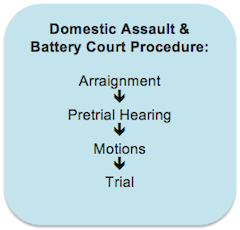
The arraignment is the first court date. The court formally advises you of the charge and enters a not-guilty plea. The judge may set bail or release conditions, including an order not to abuse or contact the alleged victim. A 209A restraining-order issue may also arise. Bring any paperwork you received and tell your lawyer about housing, family, and work concerns affected by the conditions.
Pretrial ConferenceAt the pretrial conference, the prosecution and defense address discovery, the evidence, and possible ways to resolve the case. The defense reviews the police report, 911 call, body-camera recordings, witness statements, photographs, and any statements attributed to the accused. The case may be continued while evidence is obtained or motions are prepared.
Review of Witness Issues and Evidence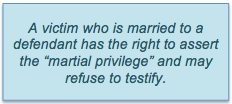
If the alleged victim does not want to testify, the Commonwealth may still consider other evidence, including a 911 call, a statement made by the accused, an officer’s observations, or another witness. The defense evaluates whether that evidence can be admitted and whether it is sufficient to prove the charge. If a witness may have a privilege not to testify, that issue must be addressed in the context of the particular case.
Preparing for a Trial DateIn many cases, the trial date becomes an important point for resolution, especially when the alleged victim will not cooperate. The Commonwealth may decide it cannot proceed, or the case may move forward based on other evidence. Attorney DelSignore prepares the case for trial while continuing to evaluate whether a resolution is in your interests.
Possible Resolutions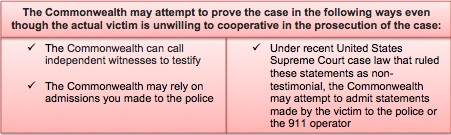
Depending on the facts and the evidence, a case may end in a dismissal, a continuance without a finding or other pretrial resolution, a plea, or a trial. Each option has consequences. A plea or admission can affect your criminal record, immigration status, firearm rights, family matters, and probation conditions. Those consequences should be discussed before you choose how to resolve the case.
How DelSignore Law Handles the ProcessAttorney DelSignore will advise you to address the allegations; get any counseling or alcohol treatment that is necessary; this will help negotiations with the District Attorney and the situation with the alleged victim. Often, the victim will be a family member or spouse who you plan to stay with and move past this bad night. Attorney DelSignore will determine if the case can be proven in Court. If there is an avenue to prove the case without the alleged victim, Attorney DelSignore will file motions based on the Sixth Amendment to exclude this evidence from being used in your case.
Questions About Your CaseCall or text Attorney DelSignore at 781-686-5924. A consultation can address your next court date, release conditions, expected timing, and the evidence that should be obtained and reviewed.




 Your Privacy Choices